
How Culverts Help Manage Driveway Drainage
Why mountain driveways wash out, how a properly sized culvert protects them, and signs your culvert needs replacing.
Why driveways wash out
On sloped North Georgia properties, rain collects in ditches and low spots and looks for the fastest way downhill — often straight across or down your driveway, carrying gravel with it.
What a culvert does
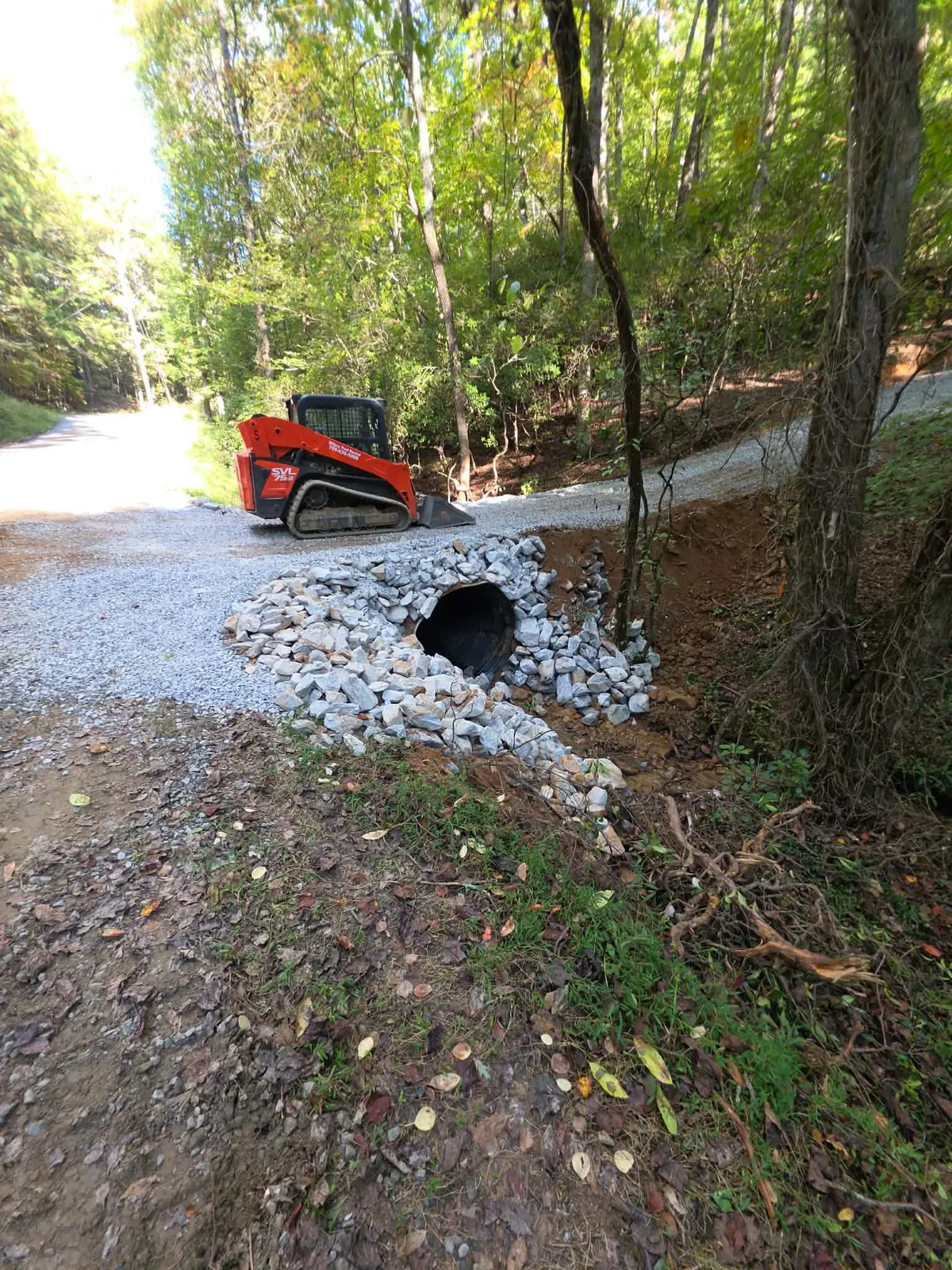
A culvert is a pipe installed under the driveway where water naturally crosses. It lets ditch water pass beneath the drive instead of over it, protecting the gravel and the base underneath.
Getting it right
Pipe size, slope and depth all matter. Undersized pipes overflow in heavy storms, and pipes without rock at the inlet and outlet can erode the soil around them. Rip rap at the ends helps stabilize the banks.
Signs of a failing culvert
Water flowing over the driveway during storms, sinkholes or dips above the pipe, a crushed or rusted pipe end, and debris clogging the inlet all mean it's time for a repair or replacement. As a Level 1A certified erosion contractor, we install and replace culverts and the drainage around them.
Need a hand?